

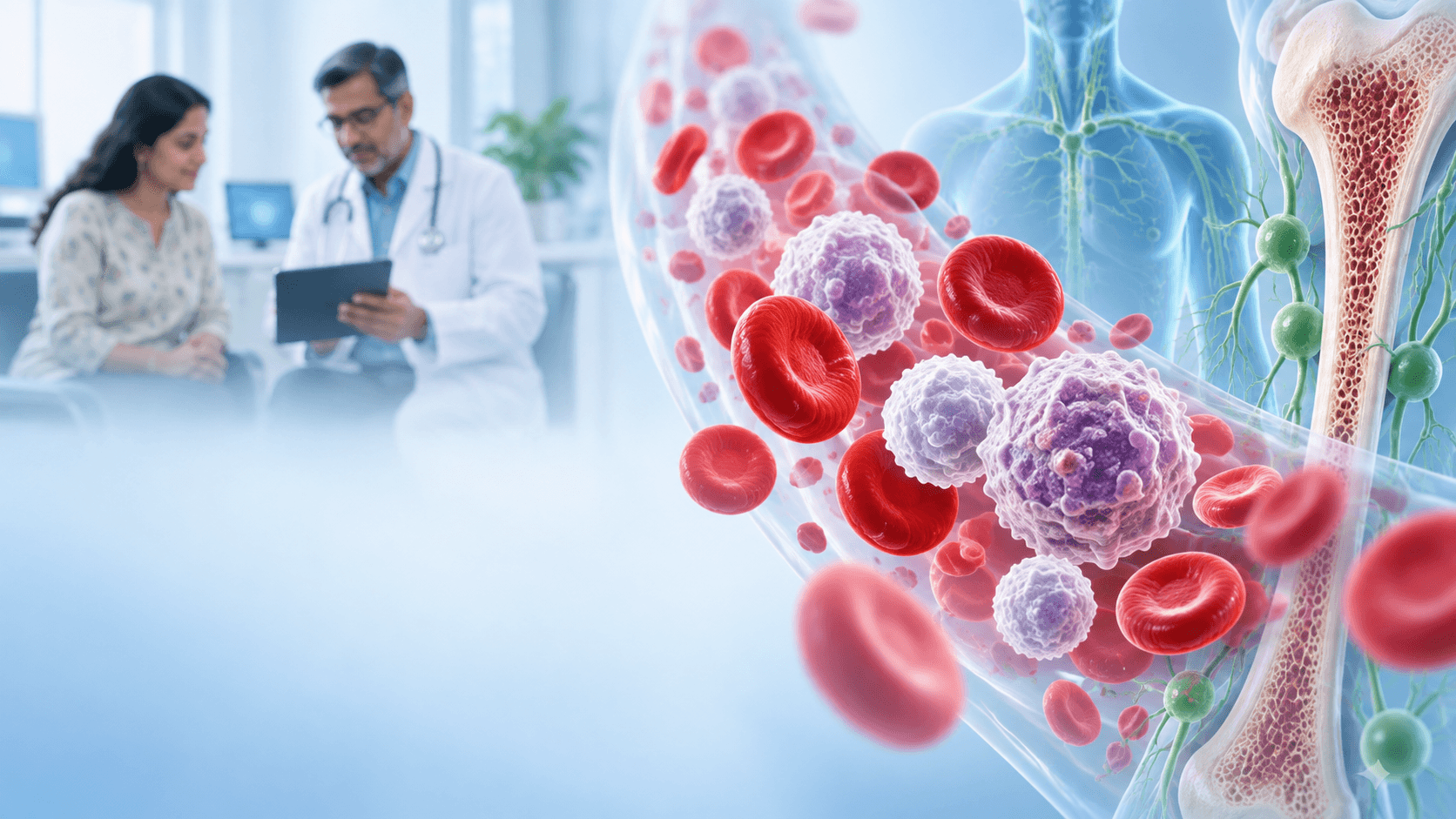
Blood Cancer Symptoms: Key Changes to Watch For
Dr. Kumanan J
KIMSHEALTH Nagercoil
Medical Oncology,Oncology,Oncology
Blood Cancer Symptoms: Key Changes to Watch For
Blood cancers occur when abnormal cells start growing uncontrollably and interfere with normal blood cell production. They can occur in the bone marrow or the lymphatic system. However, the symptoms can vary based on the type and location. Understanding common blood cancer symptoms can help you recognise unusual changes and seek timely medical advice. Before knowing the symptoms, it’s important to know about the main types of blood cancers.
Which Are the Main Types of Blood Cancer?
There are three types of blood cancer. These include the following:
· Leukaemia: This is the type which starts in the blood-forming tissues, such as bone marrow. Here, bone marrow produces an abnormally large number of white blood cells (WBCs).
· Lymphoma: This is a type which affects the lymphatic system, which produces immune cells (such as lymphocytes) and removes excess fluid from the body. Here, abnormal amounts of lymphocytes (a type of WBC) are produced, called lymphoma.
· Multiple Myeloma: This is the type that develops in plasma cells, which are a type of WBC which play a key role in immune function. Myeloma can affect the immune system and increase susceptibility to infection. Moreover, each type can affect the body differently. Therefore, symptoms may not appear in the same way in every person.
Common Blood Cancer Symptoms
Although different types of blood cancer have different symptoms, they also share some in common. The following are some common warning signs of blood cancer everyone should know:
· Persistent tiredness or weakness
· Recurrent infections
· Unexpected bleeding and easy bruising
· Weight loss without a known cause
· Sudden pain in the bones or joints that might affect daily activities or even sleep (particularly for myeloma)
· Swelling or lumps in different parts
· Unexplained fever
· Shortness of breath
· Heavy night sweats
· Sudden rashes or itching on the skin which do not heal even with treatment
· Unexplained bloating, pain or stomach discomfort
· Pale skin (pallor)
However, having any one or two of these symptoms doesn’t mean that you have a blood cancer. Several other non-cancerous conditions can also show similar symptoms. Thus, it is important to consult a doctor for proper evaluation if you think you persistently experience any of these symptoms.
Risk Factors to Consider
A risk factor is something that increases the risk of developing a particular disease. The risk factors of blood cancer include:
· Age (people older than 60)
· Sex (being male)
· Family history of blood cancer
· Long-term exposure to certain chemicals like benzene or formaldehyde
· Certain infections or diseases (such as autoimmune disease or genetic disorders)
· Weak immune system
· Smoking or tobacco use
· Earlier cancer treatments such as radiation or chemotherapy
Nonetheless, having one or two risk factors doesn't mean that you will get blood cancer. Furthermore, some people develop blood cancer without having any known risk factors.
When should you see a doctor?
It is important to consult a doctor for persistent weakness, recurrent fever, night sweats, easy bruising, etc. Nevertheless, symptoms alone cannot diagnose a disease, as many common infections, nutritional deficiencies and other non-cancerous conditions can cause similar problems. Hence, your doctor may assess your medical history and recommend blood tests or other investigations for confirmation.
Why Early Evaluation Matters
Recognising blood cancer symptoms and diagnosing the disease early can help in different ways. It can improve the treatment outcome and increase the survival rate. An early-stage diagnosis and treatment is also known to reduce the treatment expense. Most importantly, it can help your doctor understand the exact type of treatment option you need and provide appropriate care. Therefore, it is important not to ignore the unusual changes, particularly if they are persistent and interfere with your daily activities.
Related Blogs


Infant hydrocele - Swelling in Your Baby Boy’s Scrotum: Will It Go Away or Need Surgery?
Doctor, my baby boy’s scrotum looks swollen. He is feeding well and seems comfortable, but I’m worried. Is this normal? Will he need surgery?”



Heart Attack Symptoms: Recognising the Early Warning Signs
Learn the early warning signs of a heart attack and when to seek urgent medical help.

Top 10 Skin Care Tips in 2026
If your skincare goals for 2026 include glowing, radiant skin, you’re definitely not alone. With so many products and routines out there, it can get confusing trying to figure out what actually works.

Ten Effective Remedies That You Can Refer to When You Are Suffering from Muscle Cramps
Finally starting off with the gym life can get too overwhelming until you hit those muscle cramps along with the weights.

ICSI(Intra Cytoplasmic Sperm Injection)
Normally during every mid-menstrual period, one of the 2 ovaries releases an ovum. Each ovum is covered by a membrane called follicle,

Pregnancy and Delivery Care
Nothing could possibly compare to the joy of becoming a parent. After nine long months of waiting, the moment you have been waiting for is almost there:

Some Common Causes of Chest Pain
The first thing that jumps into the mind whenever you have some sort of chest pain is heart attack! It’s only human to feel that way

Organic Food Vs GMO Food: What Should You Pick?
There is no doubt that the quality of food we consume is crucial for our good health. And with more people becoming health conscious the d
Importance of Breastfeeding and Vaccinations for Newborns
Going nature’s way is best when it comes to providing nourishment for the apple of your eye – your baby. Breast milk is best for your baby as it
Percutaneous Nephrolithotomy (PCNL): A Breakthrough in Kidney Stone Treatment
Kidney stones, those small, hard mineral deposits that form in the kidneys, can cause excruciating pain and discomfort.

Skin Tags - Benign Tumor or Cancerous Tumor?
Skin tag if observed is a narrow stalk that hangs about your skin, bulging at the end. They are usually freshly colored and can grow anywhere on your body.

3 Ways Vitamin C is Helpful for the Immune System
The water-soluble vitamin, Vitamin C is also known as ascorbic acid. It is helpful in building up the blood vessels, skins, and making bones stronger

4 Signs of Mental Illness
As life has gotten fast and hectic, different health issues have got introduced lately. Not just physical issues,

4 Ways Night-Shifts Can Be Dangerous For Your Menstruation And Ovulation
A good night's sleep is of value for pregnant women. But with strenuous work-hours and shift work, sleep can quite a luxury for all.

Causes Of Infertility in Women
More and more women are putting off pregnancy till well into their 30’s or early 40’s for career reasons; infertility is fast becoming a major heartbreaking issue for such couples.

Do Not Indulge in These 9 Common Dieting Mistakes
Dieting is not just about eating less or starving yourself to meet unrealistic goals. Healthy dieting involves making informed food choices.
Laryngeal Reiinervation Procedure at KIMS Hospital
Mr. K.P 56-year-old business executive from Bangalore underwent a thyroid surgery two years back.

Learn How Stress Affects Your Heart Health
Stress is a frequent side effect of the modern 21st Century lifestyle. We’re always running around to meet deadlines, pay bills we tend to

Lose Weight: The Healthy Way
Almost everyone we know is worried about the way they look. There are several concerns people have, like their complexion

Myths About Bariatric Surgery
Bariatric surgery – be it the gastric bypass and other weight-loss surgeries – involve making changes to your digestive system to help you lose weight.

Non-alcoholic Fatty Liver Disease: Should You be Worried?
A recent study has found that 1 in 5 people in India suffers from liver disorders. Before you blame it on the increased alcohol consumption

Obesity and its Relation to Type 2 Diabetes
Diabetes is a condition that arises when the body doesn’t produce enough insulin,, hence there is excess glucose in the blood
Related Blogs
Infant hydrocele - Swelling in Your Baby Boy’s Scrotum: Will It Go Away or Need Surgery?
Doctor, my baby boy’s scrotum looks swollen. He is feeding well and seems comfortable, but I’m worried. Is this normal? Will he need surgery?”