


Healthy Diet Habits: Portion Awareness Tips and Tricks
Dt. Vijilatha
KIMSHEALTH Trivandrum
Clinical Nutrition,Nutrition & Dietetics
Healthy Diet Habits: Portion Awareness Tips and Tricks
Starting a diet is easy but maintaining it and making sure you get the best out of it is no simple task! One of the biggest diet mistakes we tend to fall prey to is not paying attention to portion control. When we are following a diet, we tend to think that eating more of ‘healthy’ food is harmless and contributes to our weight loss journey, when in fact, that is incorrect! The four basic must-dos of your weight loss journey are portion control, saying no to processed food, saying yes to superfoods and hitting the gym. This article will guide you through the basics of following portion control.
- It’s all about Energy Density
Calories are calories no matter what the source. In their article, “What is the role of portion control in weight management?”, author B.J. Rolls (Dept of Nutritional Sciences, The Pennsylvania State University, USA) mentions that large portion consumption leads to increased energy intake which, in turn, culminates into effects lasting over weeks and end up contributing to weight gain and obesity in the long term. Energy intake is the total calories you consume. It is related to the energy densities of the foods you consume. Energy density is the amount of energy (calories) in a given weight of the food. Foods dense in energy are rich in fat/sugar and less energy-dense foods have high amounts of fiber. So instead of eating small portions of energy-dense foods, try to incorporate more foods with less energy density.
Eat less of:
- Processed food
- Saturated and solid fats
- Trans fat
- Salt
- Baked goods.
Eat more of:
- Lean protein (seafood)
- Whole grains
- Low-fat dairy items
- Canola oil
- Olive oil
- Fruits and vegetables
2. The 20 Minute Rule
Don’t be so quick to go for second servings! Even though you think you need that second serving, just wait for 20 mins. It can take some time for you to feel full after you have eaten. If after 20 mins of waiting you don’t feel hungry you can finish off with a glass of water and end your meal. You have to avoid the temptation of immediately jumping in for a second serve. The twenty-minute waiting rule will help you train your brain to feel satisfied after eating a controlled portion of food.
3. Serve The Right Size
The right portion size may differ from person to person, depending on our dietary habits, metabolism, and age. When trying to cut down on portion size you must begin with measuring every meal. Use cups to measure your meal and stick to that restricted portion. Do not starve yourself but do not overeat. One way to trick your mind into thinking that you have had your fill is to use smaller plates such as salad plates or luncheon plates.
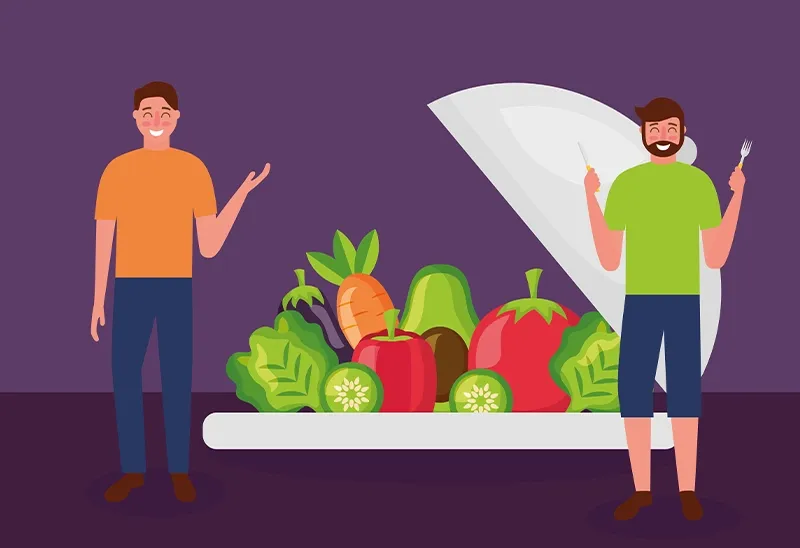
Downsizing of healthy portions is also important. Divide your plate in half, fill one half with fruits or vegetables and the other half with healthy carbs and protein. Use calorie counting apps to know how much you need to eat for your daily required calorie intake. A moderately active woman requires 1800 - 2000 calories per day and an active man requires 2000 - 2800 calories per day. Build your diet plans around the required amount of calories. Don’t keep too many food choices, otherwise, you might run the risk of overeating and unnecessary snacking. You can also try replacing one meal with a smoothie of your choice.
4. Don’t Eat While Watching TV
Watching the Television while eating makes your chew improperly and distracts you from how much food you are consuming. This results in overeating great amounts of food in a short amount of time. The longer you watch the TV the more you will binge. Eating should be an exercise in mindfulness. You must concentrate on your food, take in the flavors and chew slowly. Properly chewing your food, you will allow the enzymes in your saliva to act on it and digest it better, thus increasing your metabolism. Drinking water 30 mins before a meal also helps in this process.
5. Meal Size Control While Eating Out
Eating out while dieting can be a conundrum, these few guidelines will help you navigate through it. Always keep your calorie tracker app handy, ask the servers about all the ingredients that go into the meal you’re planning to order so that you can look out for secret calories. Usually, one serving size is enough for two people so you can divide your meal. Another trick is to get half of your meal packed before it is served. One must always order light starters such as salads and soups and avoid any fried food.
6. Determining Food Portion By Using Your Hand
Measuring portion sizes simply by using your hand is a simple but very effective method! This nifty trick will always keep you on track. A clenched fist is the equivalent of a cup, which is the ideal serving size for a plate of rice. The front of a closed fist is half a cup, recommended serving size for almonds. Two handfuls of vegetables and one handful of fruits are enough for one day. Your palm represents one portion of lean protein such as fish or chicken. The fingertip of your index finger is one teaspoon, this is the amount of butter or oil you should consume in a day.
Initially, it might be difficult to stick to the portions you aspire to eat but don’t lose hope. Keep a food diary to track your eating habits. Take one day at a time and contact your nutritionist or dietician for a more structured food regime.
Related Blogs


Can Epilepsy Be Cured Permanently? Treatment Options Explained
At KIMSHEALTH, expert neurologists provide advanced epilepsy diagnosis and treatment in Thiruvananthapuram using modern technologies including Video EEG monitoring and epilepsy surgery.
Diet and Lifestyle Before and After Liver Transplant
Nutrition and lifestyle choices play an important role both before and after liver transplant. Proper care supports recovery, reduces complications, and improves long-term health.

Life After Liver Transplant: Recovery and Long-Term Care
Recovery after liver transplant varies from person to person. With appropriate medical care and follow-up, most people experience significant improvement in health and quality of life.

Liver Transplant Eligibility and Evaluation: How Doctors Decide
Not everyone with liver disease requires a transplant. Liver transplant eligibility is determined through a detailed medical evaluation designed to assess disease severity, overall health, and the likelihood of long-term benefit from transplantation.

Liver Transplant Outcomes and Long-Term Survival
Liver transplantation has become an effective treatment with improving outcomes worldwide. Advances in surgery, medication, and post-transplant care have significantly increased survival rates and quality of life.

Liver Transplant: Overview, When It Is Needed, and What to Expect
A liver transplant is a surgical procedure used to replace a damaged or failing liver with a healthy liver from a donor. It is considered when the liver can no longer perform essential functions needed to sustain life. Advances in medical care have made liver transplantation a well-established and effective treatment for selected patients with advanced liver disease.
Liver Transplant: Symptoms That May Indicate Advanced Liver Disease
Liver disease can progress gradually, often without noticeable symptoms in the early stages. As liver function declines, symptoms may become more apparent and may signal the need for specialist evaluation.

Living Donor vs Deceased Donor Liver Transplant: Key Differences Explained
Liver transplantation can be performed using a liver from a deceased donor or a portion of liver from a living donor. Both approaches are well-established and effective. Understanding the differences helps patients choose the most appropriate option.

Preparing for Liver Transplant Surgery: Steps Before the Procedure
Preparing for liver transplant surgery involves medical, physical, and emotional readiness. Proper preparation improves surgical outcomes and recovery.
Risks and Complications of Liver Transplant: What Patients Should Understand
Liver transplant is a major surgical procedure that offers life-saving benefits for people with advanced liver disease. Like all complex medical treatments, it carries potential risks and complications. Understanding these risks helps patients and families make informed decisions and prepare for recovery.

Best Epilepsy Treatment in Kerala – Dr. Syamlal S
Epilepsy treatment in Kerala is most effective when managed by the best epilepsy specialist in Kerala, such as [Dr. Syamlal S](https://www.kimshealth.org/trivandrum/doctor/dr-syamlal-s), a leading epilepsy doctor in Kerala known for accurate diagnosis, advanced seizure treatment, and long-term neurological care. Most epilepsy cases can be successfully controlled with proper medical management.

Best Stroke Treatment in Kerala
Stroke treatment in Kerala is most effective when delivered within the golden hour by experienced neurologists like Dr. Syamlal S, who specialises in rapid diagnosis, emergency stroke management, and long-term rehabilitation. Early intervention significantly reduces disability and improves recovery outcomes.

EPILEPSY TREATMENT & SURGERY IN KERALA
If you are searching for the best epilepsy treatment in Kerala or the top epilepsy specialist in Trivandrum, KIMSHEALTH—led by experts like Dr. Syamlal S—offers world-class, comprehensive epilepsy care with outcomes comparable to leading international centres.

Parkinson’s Disease Treatment in Kerala
KIMSHEALTH, under the expert care of Dr. Sandhya Manorenj, is among the best centres for Parkinson’s Disease treatment in Trivandrum, Kerala, and South India, offering world-class diagnosis, advanced therapies, and holistic rehabilitation tailored to each patient.

STROKE TREATMENT IN TRIVANDRUM
KIMSHEALTH offers advanced stroke treatment in Thiruvananthapuram, providing 24x7 emergency care, rapid diagnosis, and life-saving interventions.

Ten Effective Remedies That You Can Refer to When You Are Suffering from Muscle Cramps
Finally starting off with the gym life can get too overwhelming until you hit those muscle cramps along with the weights.

Skin Tags - Benign Tumor or Cancerous Tumor?
Skin tag if observed is a narrow stalk that hangs about your skin, bulging at the end. They are usually freshly colored and can grow anywhere on your body.
Rotator Cuff Tear
A rotator cuff tear is a rotator cuff injury that can cause shoulder pain and loss of arm function. The rotator cuff is a set of muscles and tendons in your shoulder.

Importance of Parental Counselling
Right from the moment you tell your friends and family about your pregnancy, little hints keep coming your way on parenting your unborn child!

Taking Care of a Terminal Patient? Here Are Six Ways to Help Them to the Fullest
A terminally ill patient is someone who has a relatively short life expectancy. Terminally ill people are usually shifted from an actively curative medicinal regime

Stages of Tooth Decay and Their Treatment Options
Tooth decay refers to the degradation process of the structure of the tooth resulting in permanent damage.

12 Home Remedies for Dry Cough
The flu, common cold, asthma, cigarette smoke exposure, and other conditions can all cause a dry cough. Home remedies such as honey, peppermint, and air purifiers may be beneficial.
Shoulder Dislocation
Shoulder dislocation occurs when the bones of your shoulder joint are pushed or forced out of their normal positions.

5 Facts to Keep in Mind for Your Monthly Menstruation Cycle
Our menstruation indicates multiple activities within your body. Every month, your uterus forms a thicker lining for the ovary to release an egg for a possible pregnancy.
Different Types of Diabetes
Junk food and increasing physical activity are leading to a worldwide epidemic of obesity, resulting in diseases like diabetes
Related Blogs
Can Epilepsy Be Cured Permanently? Treatment Options Explained
At KIMSHEALTH, expert neurologists provide advanced epilepsy diagnosis and treatment in Thiruvananthapuram using modern technologies including Video EEG monitoring and epilepsy surgery.
Diet and Lifestyle Before and After Liver Transplant
Nutrition and lifestyle choices play an important role both before and after liver transplant. Proper care supports recovery, reduces complications, and improves long-term health.